How to Buy Tires Online Without Getting Ripped Off: A Beginner's Guide
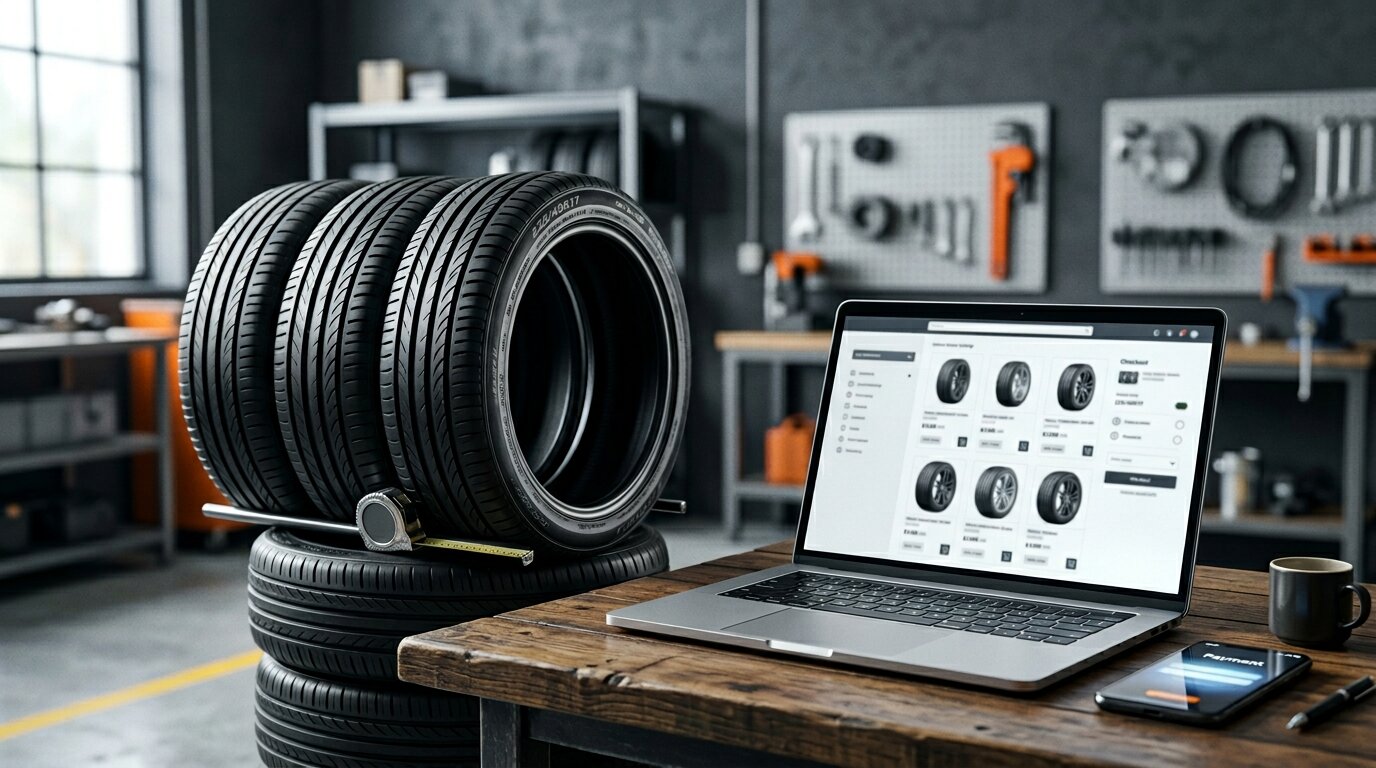
Buying tires online can save you real money, but one wrong move and you're stuck with the wrong size, a shady retailer, or hidden fees that wipe out every dollar you saved. You don't need to be a car expert to get this right. You just need to know what to look for before you hand over your payment details.
How to Find Your Exact Tire Size Before You Buy
Before purchasing tires online, it helps to start with one simple yet often-overlooked step: confirming your exact tire size. This usually takes less than a minute and can be found either on the driver-side door jamb label or directly on the tire’s sidewall. A sequence like 215/65R16 102T may look technical at first, but it clearly outlines everything from width and aspect ratio to construction type, wheel diameter, load index, and speed rating, ensuring your vehicle performs safely and efficiently.
If those markings are worn or missing, a quick VIN lookup can retrieve the manufacturer’s recommended specifications. From there, you can determine whether your vehicle requires passenger (P) or light truck (LT) tires, as well as features like M+S or 3PMSF ratings for seasonal performance. This is where using sites like wetrytires.com becomes especially useful. Platforms that understand regional driving conditions and vehicle trends can guide you toward options that fit not just your car, but also your environment, whether that means handling wet roads, heat, or mixed terrain.
Working with platforms familiar with the local market reduces the risk of mismatched purchases and helps you make more informed decisions. Instead of guessing, you’re selecting tires that align with both manufacturer specifications and real-world driving needs, ultimately leading to greater longevity and performance.
What Do Tire Sidewall Numbers Actually Mean?
Once you have the string of numbers and letters from your tire sidewall, interpreting it follows a standard pattern. Take 215/65 R16 102 T as an example:
- 215 indicates the tire’s width in millimeters, measured from sidewall to sidewall.
- 65 is the aspect ratio. It means the sidewall height is 65% of the tire’s width.
- R stands for radial construction, which is the most common type of tire construction used today.
- 16 is the rim (wheel) diameter in inches, specifying the wheel size the tire is designed to fit.
- 102 is the load index, a numerical code indicating the maximum load a tire can carry when properly inflated. The exact weight is determined by referring to a standardized load index chart.
- T is the speed rating, indicating the maximum speed at which the tire can carry its rated load under specified conditions. For a T rating, this is approximately 118 mph (190 km/h).
Which Tire Type Matches How You Drive
Choosing an appropriate tire type depends mainly on how and where you drive.
For daily commuting in varied weather, all-season tires marked with M+S (mud and snow) are a practical choice. They're designed to provide acceptable performance on both wet and dry roads and typically last longer than many performance-oriented tires.
If you frequently drive in snow, ice, or sustained cold (below about 45°F / 7°C), dedicated winter tires are more effective. Their rubber compounds and tread patterns are optimized for low temperatures, providing better traction and braking on snow and ice than all-season tires.
Drivers who prioritize handling and higher grip on dry (and often wet) pavement may prefer performance or summer performance tires. These offer improved cornering and braking compared with standard all-season tires, but usually wear faster and aren't suitable for winter conditions.
For regular off-road use, gravel roads, or frequent towing, all-terrain tires are appropriate. They typically feature more aggressive tread patterns and reinforced sidewalls to better withstand rough surfaces and heavier loads.
If fuel economy and longer tread life are priorities, consider touring or “eco” tires. These often use low-rolling-resistance designs and harder rubber compounds, and they usually carry higher UTQG treadwear ratings, indicating a longer expected service life under standardized test conditions.
How to Choose Between Premium, Mid-Range, and Budget Tire Brands
Tire brands are often grouped into three tiers: premium, mid-range, and budget. Choosing between them involves balancing initial price with long-term costs and performance.
Premium brands (such as Michelin and Bridgestone) typically provide longer tread life, stronger wet and dry grip, and more comprehensive warranties. They're generally a good fit for drivers who log higher mileage, drive in varied weather conditions, or prioritize safety and consistency.
Mid-range brands (such as Cooper or Falken) usually offer adequate performance for everyday use at a lower price point than premium tires. They can be a practical option for drivers with moderate annual mileage who want a balance between cost and performance.
Budget brands can reduce upfront costs by 20–50% compared with premium options, but this often comes with trade-offs in wet traction, braking performance, noise, and tread life. Over time, shorter tread life and potentially higher fuel consumption may offset the initial savings.
When comparing tiers, review UTQG (Uniform Tire Quality Grading) ratings for treadwear, traction, and temperature resistance, and consult independent tests and verified user reviews. Also consider total ownership cost, including installation, rotation and alignment needs, fuel efficiency, and how frequently you may need to replace the tires. This combined information helps determine which tier aligns best with your driving conditions, safety expectations, and budget.
How to Vet an Online Tire Retailer Before You Pay
Before providing payment details, it's important to vet any online tire retailer carefully. Review recent customer feedback on platforms such as Google, Facebook, Tire Rack, and Trustpilot, and look for consistent patterns rather than relying on isolated or outdated reviews. Confirm that the website uses HTTPS, accepts major credit cards or PayPal, and offers recognizable buyer protections.
Examine the return and exchange policies in detail. A typical benchmark is a 30–45 day return or satisfaction period, with clearly stated conditions for tires that have already been mounted or used. Ensure the site lists complete product information, including load index, speed rating, DOT code, and accurate vehicle-fitment tools or filters.
Before finalizing a purchase, review shipping costs, estimated delivery times, and available installer options in your area. Check whether mounting, balancing, and tire disposal fees are disclosed clearly at checkout so you can evaluate the total cost before you commit to the order.
How to Read Customer Reviews Without Getting Misled
Customer reviews can significantly influence a tire purchase, but they're most useful when evaluated carefully. Give priority to verified-buyer reviews, which are more likely to reflect actual use. Focus on recurring, concrete details such as “lasted 40,000 miles” or “became noisy after 10,000 miles” rather than general, unspecific comments.
Consider how reviewers use their vehicles. A tire rated highly for highway comfort may perform poorly in snow or off-road conditions. Group and compare reviews by driving environment, climate, and vehicle type to get a more accurate picture.
Be cautious about sudden spikes in reviews during promotions or shortly after a product launch, as these may reflect short-term impressions rather than long-term performance. Treat extremely positive or negative claims with caution and compare them against objective information.
Whenever possible, cross-check customer feedback with technical data, such as UTQG treadwear grades, traction and temperature ratings, load index, and speed rating. Professional tests and comparisons from independent sources, such as Tire Rack or automotive publications, can help confirm or challenge user-reported experiences and provide a more complete assessment of a tire’s performance.
When to Buy Tires Online for the Best Rebates and Deals
Timing tire purchases around manufacturer rebate cycles can reduce costs, sometimes by up to $100 per set. Rebates are most common in April and October, so it can be useful to plan purchases around these periods.
Before buying, verify that the exact tire model and size you want are included in the promotion, as many rebates are limited to specific product lines and require an original purchase receipt submitted by a set deadline.
Savings are usually not applied at checkout instead. Manufacturers typically provide prepaid cards or electronic rebates that may take 6–12 weeks to process.
Where allowed, you can combine retailer promotions with manufacturer rebates to increase total savings. However, rebate offers shouldn't outweigh practical considerations such as appropriate tread type, climate suitability, and your typical driving conditions.
How to Pay for Tires Online and Finance If You Need To
Paying for tires online is generally straightforward when using a major credit card or a PayPal account that includes fraud protection. Before entering any payment details, verify that the checkout page uses HTTPS and displays the appropriate security indicators in your browser. Most tire retailers accept Visa, Mastercard, American Express, Discover, and PayPal.
If you need financing, options such as Affirm commonly offer installment plans ranging from 3 to 18 months, with annual percentage rates (APRs) often between about 10% and 30%. It's important to compare the total cost of the loan, including interest, across different term lengths before making a decision. PayPal Credit may offer promotional offers, such as no interest if the balance is paid in full within 6 months, but you should review the terms carefully for any deferred interest provisions, which can result in retroactive interest charges if the promotional conditions aren't met.
When determining how much to finance, consider all associated costs in addition to the tire price. These can include shipping, mounting, balancing, valve stems, TPMS service, and tire disposal fees. Accounting for these expenses in advance can help you avoid underestimating the total amount you'll be paying over time.
How Tire Shipping and Installation Actually Work
Once you place an order, most online retailers ship passenger tires at no additional shipping cost and let you choose between home delivery and direct shipment to a participating installer. Having tires shipped directly to an installer eliminates the need to transport them yourself, and many shops can complete mounting and balancing within about 48 hours of receiving the shipment.
Installation is typically billed separately from the tire purchase. You can generally expect to pay around $15–$25 per tire for mounting and balancing, plus an additional fee for disposal of the old tires. Before ordering, confirm your full tire specifications, including size, load index, and speed rating, to reduce the risk of ordering an incompatible product. It's also important to review the retailer’s return policy in advance, as mounted tires are usually not eligible for return.
What Online Tire Return Policies Actually Cover
Before placing an order, it's important to understand what a tire return policy actually covers, as the conditions often change once the tires are mounted. Many retailers won't accept returns on installed tires, so it's advisable to confirm this in advance. Unused tires that haven't been mounted typically qualify for a full refund if returned within a set timeframe, commonly 30–45 days. For example, Tires Easy allows returns within 45 days and covers return shipping costs.
Most policies exclude tires with damage such as punctures, bulges, or signs of uneven wear, as well as any tires used for racing or off-road driving. These conditions usually void return eligibility.
In addition, if you have already submitted a manufacturer or retailer rebate, returning the tires may invalidate that rebate, so it's important to review rebate terms before initiating a return. Finally, clarify who's responsible for return shipping costs, as some sellers may deduct them from your refund.
Conclusion
Buying tires online doesn't have to be overwhelming. You've now got everything you need to find the right size, pick the best tire for your driving style, compare brands, and spot a trustworthy retailer. Don't forget to factor in total costs, check return policies, and take advantage of rebates. Follow these steps, and you'll drive away with quality tires at a fair price without falling for common traps.